
Saturday, April 09, 2011
Thank you, Honorable Zookeeper!

Wednesday, February 23, 2011
Sharing the Final Position Papers
The students have completed eight Position Papers which were recently submitted to the MMUN presidents of the committees noted below. They have agreed to allow their finished products to be published online for our community to view. We hope you enjoy reading this work written by 9, 10 and 11 year olds. (Note that last names have been removed from the papers to protect their privacy.)
Next step ... condensing their ideas into one, two and five minute speeches, and then engaging in a mock simulation on an entirely different topic to become comfortable with debate protocol before the trip to New York.
Next step ... condensing their ideas into one, two and five minute speeches, and then engaging in a mock simulation on an entirely different topic to become comfortable with debate protocol before the trip to New York.
United Nations Development Program (UNDP)
World Food Program (WFP)
United Nations High Commission on Refugees (UNHCR)
Regina's Position Paper 1
Regina's Position Paper 2
Tuesday, January 18, 2011
Time to Create a Timeline

Timelines are certainly an effective tool for helping elementary students understand the passage of time and place historical events in a chronological sequence, but in our classroom that isn't all that timelines communicate. The process of producing a self-designed timeline from beginning to end gives the student practical knowledge in language, math, practical life and the arts, in addition to a study of his particular topic of interest.
Traditionally, textbooks provide a linear representation of time related facts for students to memorize. Today, there are even many internet sites that give children access to beautiful pictorial displays of the passage of history. None of these prefabricated methods, though, outdo the hands-on, engaged learning process that occurs when a child sets out to make his own timeline in the Montessori elementary environment.
In our classroom, the many steps to creating a timeline provide a slew of opportunities for learning much more than just dates and events. The process goes something like this:

First the child needs to collect and organize some data:
1) He starts by researching a topic of interest.
2) Then he pulls together a list of related events and the dates they occurred.
3) Next he has to put the dates in order starting with the oldest proceeding to the most recent.
4) He takes notes, writing down a few ideas about each event.
5) If he would like, he illustrates something relevant about each event, labeling it with the appropriate date.
Mid-way through this lengthy process, the student plans out his paper requirements. To do this, he needs to complete several more steps that involve some work:
6) He considers the range of dates gathered in the research phase to decide how much space should be allocated to each period.
7) Next he decides on a scale (for example, six inches or a foot for every century -- the longer the better for the elementary child!)
8) And finally, he calculates how much paper will be needed and cuts it off the big paper roll.

At this point it is time to start working on creating the actual timeline:
9) First he uses a ruler to measures and mark off the full range of BC/BCE to AD dates along the edge of the paper according to his scale.
10) Then he is ready to place the illustrations, verbiage and date labels onto the time line paper, matching the dates with the linear progression he wrote along the base of the long strip of paper.
11) Once everything has been double checked by a friend, he glues it all down in place.
12) Lastly he adds headings and decorations to make it beautiful, and finally he presents it to the class.

So the next time your child tells you several days in a row that he has been working on a timeline, think of these twelve steps. You'll know that what he really means to say is that he has been reading, collecting information, planning, organizing, collaborating, negotiating, spelling, composing, sequencing, multiplying, dividing, counting, measuring, drawing, practicing his handwriting and improving his oral communication skills!
Thursday, December 30, 2010
AOC Holiday Tasting Party
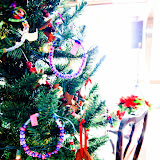
We would like to thank everyone for making our Holiday event special!
To access our web album, please click on the link below.
To access our web album, please click on the link below.
 click here to view the gallery click here to view the gallery |
| AOC Tasting Party 2010 |
Subscribe to:
Posts (Atom)